

Chemical processors produce countless vital products, including paints, pharmaceuticals, flame retardants, plastics, fertilizers, and so much more.
But a lot can go wrong at a chemical manufacturing plant, such as a spill, an explosion, or the release of harmful gases. That is why so many chemical manufacturing safety protocols focus on these areas, as they are the kinds of accidents that make headlines.
While these dangers are rightly prioritized, the insidious risk of impact damage to the facility’s infrastructure and to personnel performing work at height can be easily overlooked. Structural damage, vehicle impacts, corrosion, and deteriorating access equipment can all create additional workplace hazards if they are not identified and addressed. Structural safety in chemical manufacturing also depends on installing barriers that protect the facility itself and provide pedestrian safety.
What You'll Learn
In this article, you’ll learn:
- Why structural damage is an overlooked safety hazard in chemical manufacturing facilities
- How forklift collisions, corrosion, vibration, and everyday operations can damage structural components
- How damaged columns, barriers, guardrails, and walkways can create additional workplace safety risks
- Why protecting facility infrastructure can also help protect equipment and critical operations
- How column guards, industrial guardrails, safety railings, and access platforms can support a proactive chemical plant safety strategy
- What facility managers can do to identify and prevent structural damage before it becomes a more serious safety concern
How Risks Can Multiply
The day-to-day operations within a chemical plant environment can take a heavy toll on structural components. Chemical manufacturing facilities are filled with corrosive substances, experience constant vibration from agitators and other processing equipment, and also bear the brunt of forklift collisions.
Structural supports, columns, and walkways may appear to blend into other elements of the facility, but they are critical to operational safety. The failure of one support column can set off a chain reaction that strains or damages piping systems, electrical apparatus, and other nearby infrastructure. That means structural inspections and impact protection should be considered an important part of an overall chemical plant safety strategy.

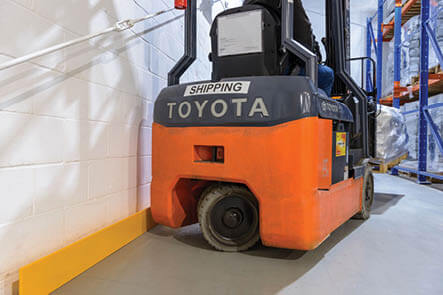
Vehicle traffic is a common culprit for such damage. Forklifts, pallet jacks, maintenance vehicles, and material-handling equipment often operate in tight spaces near machinery, racks, and structural elements. Even a minor collision can weaken a support column or compromise process equipment. Repeated low-level impacts can also cause damage that may not be immediately obvious, making routine inspections and physical barriers an important part of facility protection.
Corrosion adds another layer of risk, though much quieter and less obvious. Harsh chemical atmospheres can gradually weaken the load-bearing capacity of steel frames. Regular inspections are needed to detect silent fatigue or distress for structural damage prevention. In chemical manufacturing environments, facility managers should look for corrosion, deformation, cracks, loose connections, damaged protective barriers, and other signs that structural components may require further evaluation.
The Human and Operational Cost of Neglect
Damaged industrial guardrails, bent safety barriers, and deteriorated walkways will not provide the protection workers expect. In hazardous environments where employees must navigate elevated work areas, even a small structural defect can lead to slips, trips, and falls. Safe access systems, properly maintained guardrails, and clearly separated pedestrian and vehicle routes can help reduce these workplace hazards.
When structural damage goes unnoticed, the consequences can far exceed the costs of lost production and repairs. The primary cost can be workers’ lives.
Previous inspections found that the thickness of the tank’s shell wall had deteriorated to a point at which it was thinner than the calculated minimum safe thickness. Yet the tank was neither repaired nor taken out of service, showing that a failure in physical infrastructure can lead to a catastrophe.
This incident illustrates why identifying and addressing deteriorating infrastructure is an essential component of industrial safety. While a tank failure is different from forklift impact or damaged access equipment, the underlying lesson is similar: physical infrastructure should be inspected, maintained, and repaired when conditions indicate that it may no longer provide the required level of protection.
Equipment protection is another overlooked concern. Chemical plants rely on piping systems, electrical conduits, instrumentation, and process controls mounted to structural supports. Damage to those supports can place stress on connected equipment and increase the risk of leaks, system failures, or emergency shutdowns. Protecting structural components from vehicle impacts can therefore help protect not only the building itself, but also the equipment and systems that support critical chemical manufacturing operations.
Comprehensive Asset Protection
Effective structural safety in chemical manufacturing calls for a multi-layered approach. The first line of defense is installing robust impact protection systems to shield vital infrastructure from collisions.

- Column guards, bollards, corner guards, and door track guards protect columns and other infrastructure from the constant threat of forklift traffic and structural damage. Featuring heavy-duty, corrosion-resistant steel construction, they isolate building columns, mechanical, plumbing, and electrical apparatus, and other areas from forklift impacts. The shock of a collision is absorbed without damaging the column or the structural supports that keep a facility operational. These types of industrial impact protection systems can be strategically placed in areas where forklifts and other material-handling equipment operate close to vulnerable infrastructure.

- Industrial guardrails and safety railings help create physical separation between pedestrians, equipment, and other workplace hazards. These versatile industrial safety barriers can be used from the ground floor to the rooftop for workplace safety, including industrial stairs and crossover platforms that enable workers to bridge obstructions.
When properly designed, installed, and maintained for the application, guardrails can help support a facility’s fall protection and pedestrian safety strategy.
- Access platforms address the need for workers to reach elevated work areas, such as processing equipment, storage racks, and rooftop HVAC units. Featuring anti-slip, self-draining walking-working surfaces, and integrated guardrails, they provide safe, stable, ergonomic access to workstations. Purpose-built industrial access platforms can provide workers with a more stable alternative to improvised access when routine maintenance or inspection requires work at elevation.
Column guards, safety railings, and work access platforms offer a proactive chemical plant safety strategy to protect workers and infrastructure in hazardous environments. Together, these systems can help facility managers address multiple hazards—from vehicle impacts at floor level to safe access and fall protection in elevated work areas.
Take the Initiative for a Safer, Smarter Facility
Structural damage prevention in a chemical plant should combine routine inspections with proactive facility protection measures. Facility managers should check columns, guardrails, barriers, stairs, platforms, and vehicle traffic areas for signs of impact damage, corrosion, or wear. They should also install forklift impact protection shields, warehouse safety barriers, and industrial guardrails to avert severe impact damage to infrastructure and protect their valued employees.

A proactive approach to chemical manufacturing safety should consider both the hazards that can cause structural damage and the consequences that can occur when damaged infrastructure is left unaddressed. Establishing inspection procedures, identifying high-risk impact zones, protecting vulnerable structural components, and maintaining safe access equipment can help create a safer and more resilient facility.
Contact Omega Industrial Safety today to discuss impact protection, industrial guardrails, access platforms, and other facility safety solutions designed for demanding industrial environments. Protect your infrastructure, improve workplace safety, and help safeguard your most valuable asset—your workers.
Frequently Asked Questions About Building Supply Warehouse Safety
What can cause structural damage in a chemical manufacturing facility?
Structural damage in a chemical manufacturing facility can result from forklift and vehicle impacts, corrosion, vibration, equipment movement, and general wear and tear. Chemical plants may be particularly vulnerable because vehicles and material-handling equipment often operate near structural columns, piping, machinery, and other critical infrastructure.
Why is structural damage a safety concern in chemical plants?
Structural damage can weaken building components, damage connected equipment, and create additional hazards for workers. A damaged column, guardrail, walkway, stair, or access platform may no longer provide the protection or support expected. Identifying and addressing damage early can help reduce the potential for more serious safety and operational problems.
How can chemical plants prevent forklift impact damage?
Chemical plants can help prevent forklift impact damage by identifying high-traffic and high-risk areas and installing appropriate impact protection systems. Column guards, bollards, corner guards, and other industrial safety barriers can provide a physical buffer between material-handling equipment and vulnerable infrastructure.
What types of safety barriers are used in chemical manufacturing facilities?
Common safety barriers include industrial guardrails, safety railings, bollards, column guards, and other impact protection systems. These barriers can help separate pedestrians and vehicles, protect structural components, and establish safer traffic paths throughout an industrial facility.
How do access platforms improve safety in chemical manufacturing?
Industrial access platforms provide workers with a stable, purpose-built way to reach elevated equipment and work areas. Platforms with anti-slip walking surfaces and integrated guardrails can help reduce the need for improvised access when workers perform maintenance, inspection, or other routine tasks at elevation.
How often should structural components in a chemical plant be inspected?
Structural components should be inspected according to the facility’s inspection and maintenance program, applicable requirements, equipment manufacturer recommendations, and the conditions of the work environment. Facilities exposed to corrosive chemicals, heavy vehicle traffic, or frequent impacts may require particular attention to signs of corrosion, deformation, cracks, loose connections, and other damage. Any suspected structural deficiency should be evaluated by a qualified professional to determine the appropriate corrective action.
What should facility managers look for during a structural safety inspection?
Facility managers should look for signs of impact damage, corrosion, deformation, cracks, damaged guardrails or barriers, deteriorated walking surfaces, and loose or compromised connections. Areas where forklifts and other vehicles operate near structural components should receive particular attention. Documenting damage and addressing issues promptly can help prevent a minor condition from becoming a larger safety or operational problem.