

Experts in Loading Dock Safety

Loading docks have twice the traffic of other areas of warehouse and manufacturing facilities. Trucks are regularly pulling in and with employees loading and unloading product. These areas can be extremely dangerous. A proper railing and guardrail system is essential for loading dock safety.
A Safe Loading Dock Worksite
- Safety railing can be used for demarkation of high traffic zones, or to protect people from walking off the edges of the loading dock
- Distinctive yellow powder coating offers unparalleled visibility in addition to protection from chipping
- Barrier Systems prevent heavy equipment used on docks, such as forklifts, from damaging facility doors and other potential obsticals due to user error
- In the event that the railing or barrier system is damaged by a distracted truck or forklift driver, sections can be easily and quickly replaced due to the modular component design and fast installation
- Omega railing systems meet and exceed OSHA requirements for safety railings
Loading Dock Safety Systems
Railing systems are necessary to comply with safety protocols in warehouses and loading docks. There are inherent dangers present in these spaces, which is why an engineered safety railing system is essential.
Of particular concern is protection of the track systems for overhead railing dock doors. These track systems are typically at the edge of an entry/exit point and at high risk for collision. Damage to railing tracks could cause a serious hazard as well as loss to productivity.
Omega railing guard systems offer a range of advantages over traditional railing solutions. Contact us today to protect your loading dock and staff from workplace hazards.
Loading Dock Safety PRODUCTS
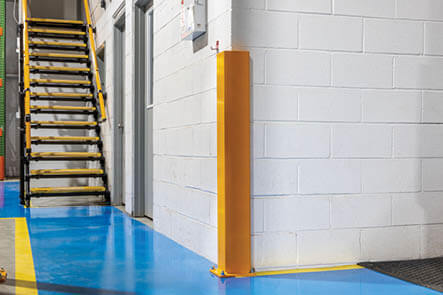
HEAVY DUTY CORNER GUARDS
Heavy duty corner guards provide maximum corner protection from forklift impact and damage.

DOOR & TRACK GUARD
Specialized door track guard protection against impacts as a result of forklift operations and other heavy duty equipment.
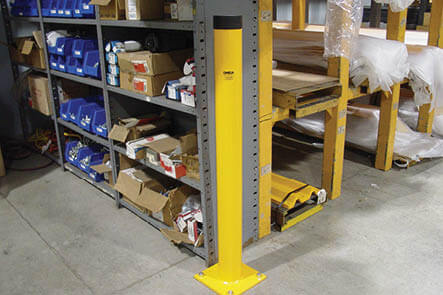
BOLLARD GUARDS
Safety pipe bollards and bollard covers can be used both indoors and outdoors to protect work areas and personnel.
Omega Customer Service IN ACTION

Kyle Fritz, Solutions Engineer
Last week we had 13,000 lbs of guardrail delivered two weeks ahead of schedule. That’s pretty unheard of right now! Thank you Omega Industrial Safety for coming through for our customer.
CUSTOMER
Two3 Solutions
PROJECT
Warehouse DISTRIBUTION CENTER
Loading Dock Barriers & safe access Systems

Pedestrian Barriers
Handrails and safety gates provide demarkation barriers for high traffic loading docks from general work traffic. These barriers restrict personnel from the fall hazards and moving objects associated with loading dock activity and offer an easily understood method of controlled access.
View Pedestrian Barriers

INDUSTRIAL BARRIERS
Trucks, containers, flatbeds, forklifts and other vehicles and equipment associated with shipping are active in loading dock areas. These vehicles and tools are prone to operator error. Industrial safety barriers help ensure the safety of personnel while protecting your facility.
View Industrial Safety Barriers

ENGINEERED ACCESS SYSTEMS
Omega specializes in engineered access systems that meet OSHA standards. From loading dock access stairs, to observation platforms, our engineered access systems are expertly constructed and fully customizable to meet the exact access requirements of your facility’s loading dock.
View Engineered Systems
SAFETY NEWS For Industrial Facilities

However, modern cold storage facilities undeniably pose safety challenges that standard warehouses do not. Freezing temperatures, condensation, and ice accumulation, combined with elevated storage systems and constant forklift traffic, increase the risk of slips, trips, and falls that can cause injuries.
Reliable, compliant cold storage warehouse safety requires engineered access systems that help workers navigate elevated work areas safely and ergonomically. Whether employees are reaching elevated conveyors, refrigeration equipment, mezzanines, racking, or maintenance platforms, the right industrial access solutions improve both safety and productivity.
Cold storage warehouses, refrigerated distribution centers, food processing facilities, and freezer storage operations all face unique workplace safety challenges. Investing in properly designed industrial stairs, access platforms, and safety railings can help reduce fall hazards, support OSHA compliance, and create a safer work environment for employees.
What You'll Learn
- Why cold storage warehouses present unique slip, trip, and fall hazards
- How industrial stairs improve access to elevated work areas
- Key features to look for in cold storage access platforms
- How safety railings provide passive fall protection
- Important OSHA considerations for refrigerated warehouse safety
- Best practices for improving worker safety and operational efficiency in cold storage facilities
What Makes Refrigerated Warehouses Different?
Cold storage facility safety recognizes that workers move constantly between floor-level operations and elevated work areas for inspections, maintenance, inventory management, and equipment servicing. This is no different from most warehouses, except that the cold environment makes each task more hazardous than in other facilities.
Sub-zero temperatures can lead to frost on walking surfaces. Rapid temperature swings between freezer sections and loading docks produce condensation that leaves floors and other surfaces slick. Bulky cold-weather clothing limits mobility and dexterity.
OSHA identifies slips, trips, and falls as common warehouse hazards and emphasizes the importance of properly maintained walking-working surfaces to protect workers. For these reasons, permanent access systems, including stairs, platforms, and handrails, are a safer choice than portable ladders or improvised access methods.
In many cold storage facilities, worker safety depends on maintaining secure access to elevated equipment and storage locations despite ice, moisture, and low-visibility conditions. Properly engineered access systems help facilities address these environmental challenges while supporting productivity and regulatory compliance.
Industrial Stairs for Warehouses
Industrial warehouse stair systems give workers a stable, ergonomic route to elevated areas. Unlike portable ladders, fixed stair systems let employees maintain balance while carrying tools, parts, or materials. They do not require a worker to make sure a ladder is set up correctly. In cold storage environments, stairways commonly provide access to:
- Mezzanines
- Equipment platforms
- Conveyor crossovers
- Refrigeration systems
- Other elevated maintenance areas

OSHA-compliant stair systems constructed of anodized aluminum or hot-dipped galvanized steel are strong, durable, and corrosion-resistant, ideal for indoor and outdoor use. Slip-resistant, self-draining treads provide secure footing and prevent frost and moisture buildup. Integrated handrails enable facilities to meet applicable safety standards. Pipe-fitted, modular designs are installed without welding or drilling and can be reconfigured as layouts and operational needs change.
When selecting industrial stairs for cold storage applications, facility managers should prioritize slip-resistant walking surfaces, corrosion-resistant materials, and OSHA-compliant handrails designed to perform in freezing temperatures and high-moisture environments.
Access Platforms for Safer Maintenance

Cold storage facilities are replete with elevated equipment that needs regular inspection and service. Elevated access platforms offer a safer working environment than ladders by providing a stable surface and enough room for a technician to work comfortably and productively without using one hand to hold onto a ladder. Critical features for cold storage platforms include:
- Slip-resistant, BS 4592-certified grating rated for wet and icy conditions.
- Corrosion-resistant aluminum or galvanized steel construction.
- Fully compliant integrated guardrails.
- Modular design to build around specific equipment.
- Availability of racks and shelves for staging tools.
- Optional self-closing safety gates for added fall protection.
Purpose-built modular platform systems suit cold-storage environments with tight constraints and changing rack configurations. They fit the available footprint while still meeting OSHA standards for stair configuration, load rating, and guardrail protection. They further support warehouse worker safety by removing the temptation to use portable ladders or makeshift scaffolds.
Because refrigeration equipment often requires routine maintenance and inspection, access platforms should be customized to the specific equipment layout, worker requirements, and available facility space. Proper platform design can improve maintenance efficiency while reducing fall-related risks.
Safety Railings and Passive Fall Protection
Installing permanent safety railings around elevated work areas is one of the most effective steps a facility can take to improve refrigerated warehouse safety. Railings provide continuous, passive fall protection. They safeguard multiple workers without requiring personal protective equipment (PPE) or certified training. Industrial handrail systems are used around:
- Elevated platforms
- Mezzanine edges
- Equipment access points
- Stair landings
- Maintenance walkways
- Loading docks

OSHA-compliant guardrails have a top rail of 42 inches (+/-3 inches) above the walking-working surface, mid-rails, vertical members, and toe boards where required. They must withstand a force of 200 lb. applied downward or outward anywhere along the top rail.
These passive fall protection systems also establish clearly defined walking paths away from forklift traffic and provide permanent OSHA warehouse safety throughout the facility. High-visibility safety yellow finishes help in dimly lit freezer areas.
Unlike active fall protection systems that depend on worker training and proper equipment use, passive fall protection solutions help provide continuous protection whenever employees access elevated work areas. This makes safety railings a valuable component of a comprehensive warehouse safety program.
Take the Initiative for a Safer, Smarter Facility
Effective cold storage warehouse safety combines industrial stairs, elevated access platforms, and permanent safety railings to create a safer work environment that improves efficiency and reduces liability from fall-related risks. These robust, modular systems install easily without welding or drilling and can be reconfigured as facility needs evolve.
Every cold storage facility has unique operational requirements, environmental conditions, and safety challenges. Working with experienced industrial safety professionals can help ensure access systems are designed to meet applicable OSHA standards, improve worker safety, and support long-term operational performance.
Contact Omega Industrial Safety today to ensure OSHA-compliant safety, bolster your refrigerated warehouse operations, and safeguard your most valuable asset, your workers.
Frequently Asked Questions
What are the biggest safety risks in cold storage warehouses?
Cold storage warehouses commonly face slip, trip, and fall hazards caused by ice, frost, condensation, and wet walking surfaces. Additional risks include elevated work areas, forklift traffic, reduced visibility, and employee fatigue caused by prolonged exposure to cold temperatures.
Why are industrial stairs safer than ladders in cold storage facilities?
Industrial stairs provide a stable walking surface, integrated handrails, and easier access while carrying tools or materials. Unlike portable ladders, they do not require setup before use and offer a safer route to elevated work areas.
What materials are best for cold storage access platforms?
Aluminum and hot-dipped galvanized steel are commonly used because they resist corrosion, perform well in cold environments, and require minimal maintenance. Slip-resistant grating is also important for reducing fall hazards.
Are guardrails required on elevated warehouse platforms?
OSHA standards generally require fall protection on elevated walking-working surfaces. Guardrails are a common passive fall protection solution used to help protect workers from falls while accessing platforms, mezzanines, and walkways.
How can cold storage facilities improve OSHA compliance?
Facilities can improve compliance by maintaining safe walking-working surfaces, installing OSHA-compliant stairs and guardrails, providing secure access to elevated equipment, conducting regular inspections, and addressing slip hazards caused by ice and condensation.
What industries benefit from cold storage safety systems?
Food and beverage distribution centers, refrigerated warehouses, pharmaceutical facilities, grocery distribution operations, cold chain logistics providers, and food processing plants can all benefit from engineered access and fall protection solutions.

E-commerce growth puts increased pressure on warehouses and fulfillment centers to keep up with rising demand and customer expectations for fast delivery. This means new construction, facility expansions, and increased automation in environments defined by constant movement: conveyor belts, packaging systems, forklifts, autonomous mobile robots, and high-density storage systems.
Productivity is critical, but warehouse safety solutions must evolve at the same pace. Elevated storage systems, overhead doors, mezzanines, maintenance platforms, rooftop equipment, and skylights create serious workplace hazards that can lead to injuries, downtime, and costly repairs. An effective safety program addresses every level of the building, from ground-level traffic lanes to rooftop access points.
Deploying engineered warehouse safety equipment helps facility managers protect workers, maintain OSHA compliance, reduce operational disruptions, and support long-term productivity.
What You'll Learn
In this article, you’ll learn:
- The most common safety hazards in e-commerce fulfillment centers
- How overhead door track guards help prevent costly infrastructure damage
- Why industrial stairs and access systems are safer than improvised climbing methods
- How skylight safety screens help prevent rooftop fall incidents
- Best practices for warehouse fall protection and facility-wide safety culture
- How engineered warehouse safety solutions improve both safety and operational efficiency
Get in on the Ground-Level Hazards
Many distribution center safety hazards begin at floor level. High volumes of pallet movement, forklift traffic, and pedestrian activity create constant collision risks. Warehouse infrastructure, particularly overhead door systems, often absorbs the impact of accidental strikes.
Repeated forklift collisions can bend, crack, or shear door tracks, leading to expensive repairs, operational downtime, and doors that no longer function safely.

Industrial door track guards provide critical protection for these vulnerable components. These durable, easy-to-install systems absorb impacts and shield overhead door tracks from damage, helping doors remain operational when facilities are operating at peak capacity.
By protecting critical infrastructure, facility managers can reduce maintenance expenses, prevent avoidable downtime, and strengthen overall warehouse safety performance.
Move Up to Safe Access for Elevated Areas

Accessing mezzanines, equipment platforms, maintenance zones, and high-bay warehouse areas is a routine task in most fulfillment centers. Unfortunately, workers sometimes rely on stacked pallets, step stools, makeshift platforms, or unsecured ladders to reach elevated areas.
These improvised access methods significantly increase the risk of slips, trips, and falls.
Industrial stairs provide a safer and more efficient alternative to ladders for frequently accessed work areas. Built with heavy-gauge steel construction, integrated handrails, and slip-resistant walking surfaces, industrial stair systems provide stable and OSHA-compliant access to elevated workspaces.
Designed with modular construction, many industrial stair and ladder systems can be installed without welding or drilling and adapted as facility layouts evolve. This flexibility allows warehouse operators to improve access while reducing exposure to fall hazards associated with temporary or makeshift solutions.
Safe access equipment is one of the most effective long-term investments for reducing workplace injuries and improving workflow efficiency.
Take It to the Top for Warehouse Roof Safety
With so much activity taking place inside an e-commerce fulfillment center, rooftop safety concerns can easily be overlooked. However, rooftop access is necessary for maintaining HVAC systems, solar arrays, generators, communication equipment, and other critical building infrastructure.
One of the most dangerous and frequently overlooked rooftop hazards is the skylight.
While skylights improve natural lighting and contribute to energy efficiency, most are not designed to support the weight of a worker. Without proper protection, skylights create serious fall-through hazards that can result in severe injuries or fatalities.
Skylight safety screens provide an always-on method of fall protection. Constructed from corrosion-resistant galvanized or stainless-steel mesh, these systems are compression-mounted to skylight curbs without penetrating the roof membrane or obstructing natural light.

Unlike some active fall protection systems, skylight safety screens provide permanent passive protection and do not require workers to connect personal fall arrest equipment during routine rooftop activities.
For facilities seeking practical rooftop fall protection, skylight safety screens are an effective and low-maintenance safety solution.
Create a Safety Culture Around the Equipment
According to the National Institute for Occupational Safety and Health (NIOSH), falls remain one of the leading causes of serious workplace injuries and fatalities.
Fulfillment centers present numerous fall hazards, including elevated conveyors, mezzanines, maintenance platforms, rooftop equipment, shipping areas, and high-bay storage systems.
Reducing risk requires more than temporary fixes. Effective warehouse fall protection starts with identifying hazards, restricting access to dangerous areas, and implementing engineered safety controls that protect workers where exposure exists.
A proactive safety strategy should include:
- Fall hazard assessments
OSHA-compliant access systems - Passive fall protection equipment
- Employee training and awareness programs
- High-visibility PPE
- Adequate lighting and signage
- Regular safety inspections

Physical safeguards are essential, but creating a culture of safety is equally important. As automation accelerates operational pace, situational awareness and consistent safety practices become increasingly critical for maintaining productivity and protecting workers.
Take the Initiative for a Safer, Smarter Facility
Successful e-commerce operations depend on speed, but long-term success requires an equally strong commitment to workplace safety.
From protecting overhead door systems and providing secure access to elevated work areas to preventing rooftop falls, engineered warehouse safety solutions help fulfillment centers protect workers while maintaining efficient operations.
By investing in proven safety equipment and infrastructure protection solutions, facility managers can:
- Reduce worker injury risks
- Support OSHA compliance efforts
- Minimize equipment damage
- Prevent costly downtime
- Extend infrastructure lifespan
- Improve operational efficiency
At Omega Industrial Safety, we help organizations implement practical, durable solutions designed for demanding industrial environments.
Contact Omega Industrial Safety today to learn how engineered warehouse safety solutions can help protect your workforce, safeguard facility infrastructure, and support long-term operational success.
Frequently Asked Questions
What are the most common safety hazards in a warehouse fulfillment center?
Common hazards include forklift collisions, falls from elevated work areas, unsafe ladder use, mezzanine access risks, damaged overhead doors, rooftop maintenance hazards, and unprotected skylights.
Why are industrial stairs safer than ladders?
Industrial stairs provide wider walking surfaces, handrails, improved stability, and safer movement for workers carrying tools or materials. They are especially beneficial in areas requiring frequent access.
How do door track guards improve warehouse safety?
Door track guards protect overhead door infrastructure from forklift impacts. This helps prevent costly repairs, reduces downtime, and keeps doors functioning safely.
Are skylights considered fall hazards?
Yes. Most skylights are not designed to support a person’s weight. Without proper protection, workers can fall through skylights during rooftop maintenance activities.
What is passive fall protection?
Passive fall protection refers to systems that provide continuous protection without requiring worker action. Examples include guardrails and skylight safety screens.
How can fulfillment centers improve workplace safety?
Facilities can improve safety through hazard assessments, engineered safety equipment, employee training, access control measures, infrastructure protection systems, and proactive fall protection programs.

Chemical processors produce countless vital products, including paints, pharmaceuticals, flame retardants, plastics, fertilizers, and so much more.
But a lot can go wrong at a chemical manufacturing plant, such as a spill, an explosion, or the release of harmful gases. That is why so many chemical manufacturing safety protocols focus on these areas, as they are the kinds of accidents that make headlines.
While these dangers are rightly prioritized, the insidious risk of impact damage to the facility’s infrastructure and to personnel performing work at height can be easily overlooked. Structural damage, vehicle impacts, corrosion, and deteriorating access equipment can all create additional workplace hazards if they are not identified and addressed. Structural safety in chemical manufacturing also depends on installing barriers that protect the facility itself and provide pedestrian safety.
What You'll Learn
In this article, you’ll learn:
- Why structural damage is an overlooked safety hazard in chemical manufacturing facilities
- How forklift collisions, corrosion, vibration, and everyday operations can damage structural components
- How damaged columns, barriers, guardrails, and walkways can create additional workplace safety risks
- Why protecting facility infrastructure can also help protect equipment and critical operations
- How column guards, industrial guardrails, safety railings, and access platforms can support a proactive chemical plant safety strategy
- What facility managers can do to identify and prevent structural damage before it becomes a more serious safety concern
How Risks Can Multiply
The day-to-day operations within a chemical plant environment can take a heavy toll on structural components. Chemical manufacturing facilities are filled with corrosive substances, experience constant vibration from agitators and other processing equipment, and also bear the brunt of forklift collisions.
Structural supports, columns, and walkways may appear to blend into other elements of the facility, but they are critical to operational safety. The failure of one support column can set off a chain reaction that strains or damages piping systems, electrical apparatus, and other nearby infrastructure. That means structural inspections and impact protection should be considered an important part of an overall chemical plant safety strategy.

Vehicle traffic is a common culprit for such damage. Forklifts, pallet jacks, maintenance vehicles, and material-handling equipment often operate in tight spaces near machinery, racks, and structural elements. Even a minor collision can weaken a support column or compromise process equipment. Repeated low-level impacts can also cause damage that may not be immediately obvious, making routine inspections and physical barriers an important part of facility protection.
Corrosion adds another layer of risk, though much quieter and less obvious. Harsh chemical atmospheres can gradually weaken the load-bearing capacity of steel frames. Regular inspections are needed to detect silent fatigue or distress for structural damage prevention. In chemical manufacturing environments, facility managers should look for corrosion, deformation, cracks, loose connections, damaged protective barriers, and other signs that structural components may require further evaluation.
The Human and Operational Cost of Neglect
Damaged industrial guardrails, bent safety barriers, and deteriorated walkways will not provide the protection workers expect. In hazardous environments where employees must navigate elevated work areas, even a small structural defect can lead to slips, trips, and falls. Safe access systems, properly maintained guardrails, and clearly separated pedestrian and vehicle routes can help reduce these workplace hazards.
When structural damage goes unnoticed, the consequences can far exceed the costs of lost production and repairs. The primary cost can be workers’ lives.
Previous inspections found that the thickness of the tank’s shell wall had deteriorated to a point at which it was thinner than the calculated minimum safe thickness. Yet the tank was neither repaired nor taken out of service, showing that a failure in physical infrastructure can lead to a catastrophe.
This incident illustrates why identifying and addressing deteriorating infrastructure is an essential component of industrial safety. While a tank failure is different from forklift impact or damaged access equipment, the underlying lesson is similar: physical infrastructure should be inspected, maintained, and repaired when conditions indicate that it may no longer provide the required level of protection.
Equipment protection is another overlooked concern. Chemical plants rely on piping systems, electrical conduits, instrumentation, and process controls mounted to structural supports. Damage to those supports can place stress on connected equipment and increase the risk of leaks, system failures, or emergency shutdowns. Protecting structural components from vehicle impacts can therefore help protect not only the building itself, but also the equipment and systems that support critical chemical manufacturing operations.
Comprehensive Asset Protection
Effective structural safety in chemical manufacturing calls for a multi-layered approach. The first line of defense is installing robust impact protection systems to shield vital infrastructure from collisions.

- Column guards, bollards, corner guards, and door track guards protect columns and other infrastructure from the constant threat of forklift traffic and structural damage. Featuring heavy-duty, corrosion-resistant steel construction, they isolate building columns, mechanical, plumbing, and electrical apparatus, and other areas from forklift impacts. The shock of a collision is absorbed without damaging the column or the structural supports that keep a facility operational. These types of industrial impact protection systems can be strategically placed in areas where forklifts and other material-handling equipment operate close to vulnerable infrastructure.

- Industrial guardrails and safety railings help create physical separation between pedestrians, equipment, and other workplace hazards. These versatile industrial safety barriers can be used from the ground floor to the rooftop for workplace safety, including industrial stairs and crossover platforms that enable workers to bridge obstructions.
When properly designed, installed, and maintained for the application, guardrails can help support a facility’s fall protection and pedestrian safety strategy.
- Access platforms address the need for workers to reach elevated work areas, such as processing equipment, storage racks, and rooftop HVAC units. Featuring anti-slip, self-draining walking-working surfaces, and integrated guardrails, they provide safe, stable, ergonomic access to workstations. Purpose-built industrial access platforms can provide workers with a more stable alternative to improvised access when routine maintenance or inspection requires work at elevation.
Column guards, safety railings, and work access platforms offer a proactive chemical plant safety strategy to protect workers and infrastructure in hazardous environments. Together, these systems can help facility managers address multiple hazards—from vehicle impacts at floor level to safe access and fall protection in elevated work areas.
Take the Initiative for a Safer, Smarter Facility
Structural damage prevention in a chemical plant should combine routine inspections with proactive facility protection measures. Facility managers should check columns, guardrails, barriers, stairs, platforms, and vehicle traffic areas for signs of impact damage, corrosion, or wear. They should also install forklift impact protection shields, warehouse safety barriers, and industrial guardrails to avert severe impact damage to infrastructure and protect their valued employees.

A proactive approach to chemical manufacturing safety should consider both the hazards that can cause structural damage and the consequences that can occur when damaged infrastructure is left unaddressed. Establishing inspection procedures, identifying high-risk impact zones, protecting vulnerable structural components, and maintaining safe access equipment can help create a safer and more resilient facility.
Contact Omega Industrial Safety today to discuss impact protection, industrial guardrails, access platforms, and other facility safety solutions designed for demanding industrial environments. Protect your infrastructure, improve workplace safety, and help safeguard your most valuable asset—your workers.
Frequently Asked Questions About Building Supply Warehouse Safety
What can cause structural damage in a chemical manufacturing facility?
Structural damage in a chemical manufacturing facility can result from forklift and vehicle impacts, corrosion, vibration, equipment movement, and general wear and tear. Chemical plants may be particularly vulnerable because vehicles and material-handling equipment often operate near structural columns, piping, machinery, and other critical infrastructure.
Why is structural damage a safety concern in chemical plants?
Structural damage can weaken building components, damage connected equipment, and create additional hazards for workers. A damaged column, guardrail, walkway, stair, or access platform may no longer provide the protection or support expected. Identifying and addressing damage early can help reduce the potential for more serious safety and operational problems.
How can chemical plants prevent forklift impact damage?
Chemical plants can help prevent forklift impact damage by identifying high-traffic and high-risk areas and installing appropriate impact protection systems. Column guards, bollards, corner guards, and other industrial safety barriers can provide a physical buffer between material-handling equipment and vulnerable infrastructure.
What types of safety barriers are used in chemical manufacturing facilities?
Common safety barriers include industrial guardrails, safety railings, bollards, column guards, and other impact protection systems. These barriers can help separate pedestrians and vehicles, protect structural components, and establish safer traffic paths throughout an industrial facility.
How do access platforms improve safety in chemical manufacturing?
Industrial access platforms provide workers with a stable, purpose-built way to reach elevated equipment and work areas. Platforms with anti-slip walking surfaces and integrated guardrails can help reduce the need for improvised access when workers perform maintenance, inspection, or other routine tasks at elevation.
How often should structural components in a chemical plant be inspected?
Structural components should be inspected according to the facility’s inspection and maintenance program, applicable requirements, equipment manufacturer recommendations, and the conditions of the work environment. Facilities exposed to corrosive chemicals, heavy vehicle traffic, or frequent impacts may require particular attention to signs of corrosion, deformation, cracks, loose connections, and other damage. Any suspected structural deficiency should be evaluated by a qualified professional to determine the appropriate corrective action.
What should facility managers look for during a structural safety inspection?
Facility managers should look for signs of impact damage, corrosion, deformation, cracks, damaged guardrails or barriers, deteriorated walking surfaces, and loose or compromised connections. Areas where forklifts and other vehicles operate near structural components should receive particular attention. Documenting damage and addressing issues promptly can help prevent a minor condition from becoming a larger safety or operational problem.
Loading dock railing systems in ACTION
Streamlining Loading Dock Safety
Efficient Design And Installation Of Loading Dock Safety Barriers & Systems

LET’S TALK
Our experts are here to discuss your facility needs. We’ll give you the information without any sales pressure.

SYSTEM DESIGN
Whether it’s a small area or an entire plant, Omega safety engineers make sure your staff is protected.

ORDER & DELIVERY
We have a massive stock of inventory and the ability to manufacture custom pieces quickly and accurately.

INSTALLATION
Omega can facilitate turnkey installation, or you can have your personnel install with standard equipment.