

Fall Barriers and Access For Heights & Leading Edges

Anyone accessing or working close to an elevated edge is at significant risk of an accident occurring. Per OSHA Code, elevated work surfaces must be properly secured from potential fall hazards. Our experts are fully trained to design proper railing and access systems for the elevated areas in your facility, helping you stay compliant and reduce risk.
Advantages of Omega Elevated Fall Hazard Systems
- Omega systems can accommodate almost any access stair or elevated work area configuration
- The safety yellow coating makes our systems highly visible in industrial work environments
- Our systems are modular in nature making damaged components easy and quick to replace
- Modular components allow for system adjustment as needed as elevated work areas are revised or expanded
Elevated Structure Safety Systems
Safety railing and barrier systems are necessary in work environments with stairs and elevated areas to prevent individuals from falling and incurring serious injuries. It is important for employers to strictly adhere to the guidelines set forth by the Occupational Safety and Health Administration (OSHA) when implementing barrier systems.
Omega railing systems offer a range of advantages over traditional railing solutions. Contact us today to protect your staff when working on elevated surfaces.
Elevated Structure Safety Products

STAIRWAY & LADDER SYSTEMS
Omega offers a variety of structural stair systems, crossovers, and ladder systems.

MEZZANINE SYSTEMS
Omega can design, produce and install compliant mezzanine systems to increase usable facility workspace.
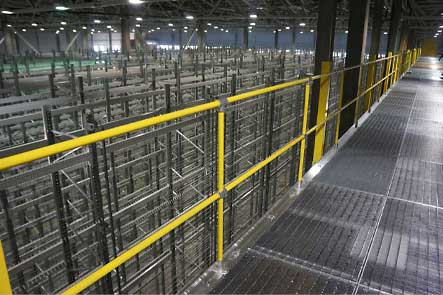
INDUSTRIAL HANDRAILS
Steel pipe handrails and safety handrails constructed from heavy gauge steel.
Omega Customer Service IN ACTION

Kyle Fritz, Solutions Engineer
Last week we had 13,000 lbs of guardrail delivered two weeks ahead of schedule. That’s pretty unheard of right now! Thank you Omega Industrial Safety for coming through for our customer.
CUSTOMER
Two3 Solutions
PROJECT
Warehouse DISTRIBUTION CENTER
elevated Work Surface safe access Systems

Pedestrian Barriers
Handrails and safety gates provide protection against falls for employees working on elevated work surfaces. These barriers restrict personnel from the leading edge hazards associated with uneven and raised surfaces and offer safe access to these areas when needed.
View Pedestrian Barriers

INDUSTRIAL BARRIERS
Industrial Safety Barriers can be critically important on elevated surfaces where the impact of a forklift, or other heavy machinery can compromise the facility’s structural integrity. These barriers play an integral role in protecting people and costly machinery used on site.
View Industrial Safety Barriers

ENGINEERED ACCESS SYSTEMS
Engineered stairway and ladder systems can create and provide safe access to elevated work areas in your facility. Omega systems are designed are by industry experts to meet OSHA standards and can be customized to fit your specific raised area access requirements.
View Engineered Systems
SAFETY NEWS For Industrial Facilities

E-commerce growth puts increased pressure on warehouses and fulfillment centers to keep up with rising demand and customer expectations for fast delivery. This means new construction, facility expansions, and increased automation in environments defined by constant movement: conveyor belts, packaging systems, forklifts, autonomous mobile robots, and high-density storage systems.
Productivity is critical, but warehouse safety solutions must evolve at the same pace. Elevated storage systems, overhead doors, mezzanines, maintenance platforms, rooftop equipment, and skylights create serious workplace hazards that can lead to injuries, downtime, and costly repairs. An effective safety program addresses every level of the building, from ground-level traffic lanes to rooftop access points.
Deploying engineered warehouse safety equipment helps facility managers protect workers, maintain OSHA compliance, reduce operational disruptions, and support long-term productivity.
What You'll Learn
In this article, you’ll learn:
- The most common safety hazards in e-commerce fulfillment centers
- How overhead door track guards help prevent costly infrastructure damage
- Why industrial stairs and access systems are safer than improvised climbing methods
- How skylight safety screens help prevent rooftop fall incidents
- Best practices for warehouse fall protection and facility-wide safety culture
- How engineered warehouse safety solutions improve both safety and operational efficiency
Get in on the Ground-Level Hazards
Many distribution center safety hazards begin at floor level. High volumes of pallet movement, forklift traffic, and pedestrian activity create constant collision risks. Warehouse infrastructure, particularly overhead door systems, often absorbs the impact of accidental strikes.
Repeated forklift collisions can bend, crack, or shear door tracks, leading to expensive repairs, operational downtime, and doors that no longer function safely.

Industrial door track guards provide critical protection for these vulnerable components. These durable, easy-to-install systems absorb impacts and shield overhead door tracks from damage, helping doors remain operational when facilities are operating at peak capacity.
By protecting critical infrastructure, facility managers can reduce maintenance expenses, prevent avoidable downtime, and strengthen overall warehouse safety performance.
Move Up to Safe Access for Elevated Areas

Accessing mezzanines, equipment platforms, maintenance zones, and high-bay warehouse areas is a routine task in most fulfillment centers. Unfortunately, workers sometimes rely on stacked pallets, step stools, makeshift platforms, or unsecured ladders to reach elevated areas.
These improvised access methods significantly increase the risk of slips, trips, and falls.
Industrial stairs provide a safer and more efficient alternative to ladders for frequently accessed work areas. Built with heavy-gauge steel construction, integrated handrails, and slip-resistant walking surfaces, industrial stair systems provide stable and OSHA-compliant access to elevated workspaces.
Designed with modular construction, many industrial stair and ladder systems can be installed without welding or drilling and adapted as facility layouts evolve. This flexibility allows warehouse operators to improve access while reducing exposure to fall hazards associated with temporary or makeshift solutions.
Safe access equipment is one of the most effective long-term investments for reducing workplace injuries and improving workflow efficiency.
Take It to the Top for Warehouse Roof Safety
With so much activity taking place inside an e-commerce fulfillment center, rooftop safety concerns can easily be overlooked. However, rooftop access is necessary for maintaining HVAC systems, solar arrays, generators, communication equipment, and other critical building infrastructure.
One of the most dangerous and frequently overlooked rooftop hazards is the skylight.
While skylights improve natural lighting and contribute to energy efficiency, most are not designed to support the weight of a worker. Without proper protection, skylights create serious fall-through hazards that can result in severe injuries or fatalities.
Skylight safety screens provide an always-on method of fall protection. Constructed from corrosion-resistant galvanized or stainless-steel mesh, these systems are compression-mounted to skylight curbs without penetrating the roof membrane or obstructing natural light.

Unlike some active fall protection systems, skylight safety screens provide permanent passive protection and do not require workers to connect personal fall arrest equipment during routine rooftop activities.
For facilities seeking practical rooftop fall protection, skylight safety screens are an effective and low-maintenance safety solution.
Create a Safety Culture Around the Equipment
According to the National Institute for Occupational Safety and Health (NIOSH), falls remain one of the leading causes of serious workplace injuries and fatalities.
Fulfillment centers present numerous fall hazards, including elevated conveyors, mezzanines, maintenance platforms, rooftop equipment, shipping areas, and high-bay storage systems.
Reducing risk requires more than temporary fixes. Effective warehouse fall protection starts with identifying hazards, restricting access to dangerous areas, and implementing engineered safety controls that protect workers where exposure exists.
A proactive safety strategy should include:
- Fall hazard assessments
OSHA-compliant access systems - Passive fall protection equipment
- Employee training and awareness programs
- High-visibility PPE
- Adequate lighting and signage
- Regular safety inspections

Physical safeguards are essential, but creating a culture of safety is equally important. As automation accelerates operational pace, situational awareness and consistent safety practices become increasingly critical for maintaining productivity and protecting workers.
Take the Initiative for a Safer, Smarter Facility
Successful e-commerce operations depend on speed, but long-term success requires an equally strong commitment to workplace safety.
From protecting overhead door systems and providing secure access to elevated work areas to preventing rooftop falls, engineered warehouse safety solutions help fulfillment centers protect workers while maintaining efficient operations.
By investing in proven safety equipment and infrastructure protection solutions, facility managers can:
- Reduce worker injury risks
- Support OSHA compliance efforts
- Minimize equipment damage
- Prevent costly downtime
- Extend infrastructure lifespan
- Improve operational efficiency
At Omega Industrial Safety, we help organizations implement practical, durable solutions designed for demanding industrial environments.
Contact Omega Industrial Safety today to learn how engineered warehouse safety solutions can help protect your workforce, safeguard facility infrastructure, and support long-term operational success.
Frequently Asked Questions
What are the most common safety hazards in a warehouse fulfillment center?
Common hazards include forklift collisions, falls from elevated work areas, unsafe ladder use, mezzanine access risks, damaged overhead doors, rooftop maintenance hazards, and unprotected skylights.
Why are industrial stairs safer than ladders?
Industrial stairs provide wider walking surfaces, handrails, improved stability, and safer movement for workers carrying tools or materials. They are especially beneficial in areas requiring frequent access.
How do door track guards improve warehouse safety?
Door track guards protect overhead door infrastructure from forklift impacts. This helps prevent costly repairs, reduces downtime, and keeps doors functioning safely.
Are skylights considered fall hazards?
Yes. Most skylights are not designed to support a person’s weight. Without proper protection, workers can fall through skylights during rooftop maintenance activities.
What is passive fall protection?
Passive fall protection refers to systems that provide continuous protection without requiring worker action. Examples include guardrails and skylight safety screens.
How can fulfillment centers improve workplace safety?
Facilities can improve safety through hazard assessments, engineered safety equipment, employee training, access control measures, infrastructure protection systems, and proactive fall protection programs.

Chemical processors produce countless vital products, including paints, pharmaceuticals, flame retardants, plastics, fertilizers, and so much more.
But a lot can go wrong at a chemical manufacturing plant, such as a spill, an explosion, or the release of harmful gases. That is why so many chemical manufacturing safety protocols focus on these areas, as they are the kinds of accidents that make headlines.
While these dangers are rightly prioritized, the insidious risk of impact damage to the facility’s infrastructure and to personnel performing work at height can be easily overlooked. Structural damage, vehicle impacts, corrosion, and deteriorating access equipment can all create additional workplace hazards if they are not identified and addressed. Structural safety in chemical manufacturing also depends on installing barriers that protect the facility itself and provide pedestrian safety.
What You'll Learn
In this article, you’ll learn:
- Why structural damage is an overlooked safety hazard in chemical manufacturing facilities
- How forklift collisions, corrosion, vibration, and everyday operations can damage structural components
- How damaged columns, barriers, guardrails, and walkways can create additional workplace safety risks
- Why protecting facility infrastructure can also help protect equipment and critical operations
- How column guards, industrial guardrails, safety railings, and access platforms can support a proactive chemical plant safety strategy
- What facility managers can do to identify and prevent structural damage before it becomes a more serious safety concern
How Risks Can Multiply
The day-to-day operations within a chemical plant environment can take a heavy toll on structural components. Chemical manufacturing facilities are filled with corrosive substances, experience constant vibration from agitators and other processing equipment, and also bear the brunt of forklift collisions.
Structural supports, columns, and walkways may appear to blend into other elements of the facility, but they are critical to operational safety. The failure of one support column can set off a chain reaction that strains or damages piping systems, electrical apparatus, and other nearby infrastructure. That means structural inspections and impact protection should be considered an important part of an overall chemical plant safety strategy.

Vehicle traffic is a common culprit for such damage. Forklifts, pallet jacks, maintenance vehicles, and material-handling equipment often operate in tight spaces near machinery, racks, and structural elements. Even a minor collision can weaken a support column or compromise process equipment. Repeated low-level impacts can also cause damage that may not be immediately obvious, making routine inspections and physical barriers an important part of facility protection.
Corrosion adds another layer of risk, though much quieter and less obvious. Harsh chemical atmospheres can gradually weaken the load-bearing capacity of steel frames. Regular inspections are needed to detect silent fatigue or distress for structural damage prevention. In chemical manufacturing environments, facility managers should look for corrosion, deformation, cracks, loose connections, damaged protective barriers, and other signs that structural components may require further evaluation.
The Human and Operational Cost of Neglect
Damaged industrial guardrails, bent safety barriers, and deteriorated walkways will not provide the protection workers expect. In hazardous environments where employees must navigate elevated work areas, even a small structural defect can lead to slips, trips, and falls. Safe access systems, properly maintained guardrails, and clearly separated pedestrian and vehicle routes can help reduce these workplace hazards.
When structural damage goes unnoticed, the consequences can far exceed the costs of lost production and repairs. The primary cost can be workers’ lives.
Previous inspections found that the thickness of the tank’s shell wall had deteriorated to a point at which it was thinner than the calculated minimum safe thickness. Yet the tank was neither repaired nor taken out of service, showing that a failure in physical infrastructure can lead to a catastrophe.
This incident illustrates why identifying and addressing deteriorating infrastructure is an essential component of industrial safety. While a tank failure is different from forklift impact or damaged access equipment, the underlying lesson is similar: physical infrastructure should be inspected, maintained, and repaired when conditions indicate that it may no longer provide the required level of protection.
Equipment protection is another overlooked concern. Chemical plants rely on piping systems, electrical conduits, instrumentation, and process controls mounted to structural supports. Damage to those supports can place stress on connected equipment and increase the risk of leaks, system failures, or emergency shutdowns. Protecting structural components from vehicle impacts can therefore help protect not only the building itself, but also the equipment and systems that support critical chemical manufacturing operations.
Comprehensive Asset Protection
Effective structural safety in chemical manufacturing calls for a multi-layered approach. The first line of defense is installing robust impact protection systems to shield vital infrastructure from collisions.

- Column guards, bollards, corner guards, and door track guards protect columns and other infrastructure from the constant threat of forklift traffic and structural damage. Featuring heavy-duty, corrosion-resistant steel construction, they isolate building columns, mechanical, plumbing, and electrical apparatus, and other areas from forklift impacts. The shock of a collision is absorbed without damaging the column or the structural supports that keep a facility operational. These types of industrial impact protection systems can be strategically placed in areas where forklifts and other material-handling equipment operate close to vulnerable infrastructure.

- Industrial guardrails and safety railings help create physical separation between pedestrians, equipment, and other workplace hazards. These versatile industrial safety barriers can be used from the ground floor to the rooftop for workplace safety, including industrial stairs and crossover platforms that enable workers to bridge obstructions.
When properly designed, installed, and maintained for the application, guardrails can help support a facility’s fall protection and pedestrian safety strategy.
- Access platforms address the need for workers to reach elevated work areas, such as processing equipment, storage racks, and rooftop HVAC units. Featuring anti-slip, self-draining walking-working surfaces, and integrated guardrails, they provide safe, stable, ergonomic access to workstations. Purpose-built industrial access platforms can provide workers with a more stable alternative to improvised access when routine maintenance or inspection requires work at elevation.
Column guards, safety railings, and work access platforms offer a proactive chemical plant safety strategy to protect workers and infrastructure in hazardous environments. Together, these systems can help facility managers address multiple hazards—from vehicle impacts at floor level to safe access and fall protection in elevated work areas.
Take the Initiative for a Safer, Smarter Facility
Structural damage prevention in a chemical plant should combine routine inspections with proactive facility protection measures. Facility managers should check columns, guardrails, barriers, stairs, platforms, and vehicle traffic areas for signs of impact damage, corrosion, or wear. They should also install forklift impact protection shields, warehouse safety barriers, and industrial guardrails to avert severe impact damage to infrastructure and protect their valued employees.

A proactive approach to chemical manufacturing safety should consider both the hazards that can cause structural damage and the consequences that can occur when damaged infrastructure is left unaddressed. Establishing inspection procedures, identifying high-risk impact zones, protecting vulnerable structural components, and maintaining safe access equipment can help create a safer and more resilient facility.
Contact Omega Industrial Safety today to discuss impact protection, industrial guardrails, access platforms, and other facility safety solutions designed for demanding industrial environments. Protect your infrastructure, improve workplace safety, and help safeguard your most valuable asset—your workers.
Frequently Asked Questions About Building Supply Warehouse Safety
What can cause structural damage in a chemical manufacturing facility?
Structural damage in a chemical manufacturing facility can result from forklift and vehicle impacts, corrosion, vibration, equipment movement, and general wear and tear. Chemical plants may be particularly vulnerable because vehicles and material-handling equipment often operate near structural columns, piping, machinery, and other critical infrastructure.
Why is structural damage a safety concern in chemical plants?
Structural damage can weaken building components, damage connected equipment, and create additional hazards for workers. A damaged column, guardrail, walkway, stair, or access platform may no longer provide the protection or support expected. Identifying and addressing damage early can help reduce the potential for more serious safety and operational problems.
How can chemical plants prevent forklift impact damage?
Chemical plants can help prevent forklift impact damage by identifying high-traffic and high-risk areas and installing appropriate impact protection systems. Column guards, bollards, corner guards, and other industrial safety barriers can provide a physical buffer between material-handling equipment and vulnerable infrastructure.
What types of safety barriers are used in chemical manufacturing facilities?
Common safety barriers include industrial guardrails, safety railings, bollards, column guards, and other impact protection systems. These barriers can help separate pedestrians and vehicles, protect structural components, and establish safer traffic paths throughout an industrial facility.
How do access platforms improve safety in chemical manufacturing?
Industrial access platforms provide workers with a stable, purpose-built way to reach elevated equipment and work areas. Platforms with anti-slip walking surfaces and integrated guardrails can help reduce the need for improvised access when workers perform maintenance, inspection, or other routine tasks at elevation.
How often should structural components in a chemical plant be inspected?
Structural components should be inspected according to the facility’s inspection and maintenance program, applicable requirements, equipment manufacturer recommendations, and the conditions of the work environment. Facilities exposed to corrosive chemicals, heavy vehicle traffic, or frequent impacts may require particular attention to signs of corrosion, deformation, cracks, loose connections, and other damage. Any suspected structural deficiency should be evaluated by a qualified professional to determine the appropriate corrective action.
What should facility managers look for during a structural safety inspection?
Facility managers should look for signs of impact damage, corrosion, deformation, cracks, damaged guardrails or barriers, deteriorated walking surfaces, and loose or compromised connections. Areas where forklifts and other vehicles operate near structural components should receive particular attention. Documenting damage and addressing issues promptly can help prevent a minor condition from becoming a larger safety or operational problem.

If you count the engine as one piece, a typical vehicle has about 18,000 parts. But if you count every fastener, seal, and connector, there are some 30,000 parts in an average car. Considering various makes and models, that is a considerable amount of inventory to be stored on racks, shelves, pallets, bins, and cabinets in an automotive distribution center.
With thousands of individual automotive components moving through a facility every day, protecting inventory and the infrastructure that supports these operations is essential. Automotive distribution centers must balance efficient material handling with effective warehouse safety measures to reduce the risk of collisions, product damage, and costly operational disruptions.
Not that the parts can rest easily. Forklifts, pallet jacks, and sweepers move constantly between storage areas, loading docks, and shipping lanes. This nonstop activity keeps operations running, but it also puts infrastructure, equipment, and personnel at risk. A collision can damage expensive inventory, throw tight delivery schedules awry, and cause costly downtime.
Forklift traffic is one of the most important considerations when developing an automotive warehouse safety strategy. OSHA identifies pedestrian traffic, narrow aisles, loading docks, and other workplace conditions as important considerations for powered industrial truck safety. OSHA also recommends separating forklift and pedestrian traffic where possible and using pedestrian walkways, permanent railings, or other protective barriers.
OSHA has reported that powered industrial truck accidents have historically resulted in approximately 85 fatalities and 34,900 serious injuries annually. While these figures come from OSHA’s rulemaking data, they illustrate the importance of proper forklift operation, operator training, traffic management, and physical safeguards in facilities where powered industrial trucks are used.
Even skilled operators can misjudge distances, miss a blind corner, or get squeezed in a congested aisle. When collisions happen, building columns, racking, machinery, and overhead doors are often hit. A comprehensive forklift damage prevention strategy can help protect these vulnerable areas while supporting safer, more efficient material handling operations.
What You'll Learn
In this guide, you’ll learn how to:
- Why forklift-related impacts are one of the most common causes of warehouse damage.
- The hidden costs of unprotected rack systems, structural corners, and loading dock areas.
- How warehouse safety barriers help reduce facility damage and improve workplace safety.
- Where bollards, corner guards, floor angle protection, and rack guards provide the greatest return on investment.
- Best practices for creating a safer building supply warehouse environment.
Install Warehouse Guardrails and Safety Barriers
Warehouse guardrails and industrial safety barriers create a physical separation between vehicles and vulnerable infrastructure. These forklift safety barriers absorb impacts before forklifts reach walkways, columns, or equipment. Constructed of strong, durable, corrosion-resistant galvanized steel with a “safety yellow” powder coating, the guardrail systems are built to withstand repeated hits without disrupting daily operations. Modular construction makes them easy to install and reconfigure as facility needs change.
For automotive distribution centers, strategically placed guardrails can help protect high-traffic areas, building structures, equipment, pedestrian routes, and other assets from accidental forklift impacts. Physical barriers also provide an additional layer of protection beyond operator awareness and traffic rules.
Paired with pallet rack guards, warehouse safety barriers protect building columns and rack systems from accidental contact. This is especially important in automotive warehouses, where heavy, premium items like engines and alloy wheels can be seriously damaged if struck.
Rack protection is particularly important in facilities where forklifts operate close to pallet racking. A properly planned combination of rack guards, column protection, and traffic barriers can help reduce the potential for impact damage to both storage systems and inventory.
Bolster Warehouse Traffic Safety
Effective warehouse traffic safety starts with facility layout. Clearly marked travel lanes, dedicated pedestrian walkways, and improved intersection visibility all reduce the risk of collisions. Periodic reviews of traffic patterns help identify bottlenecks before they lead to accidents. Combining engineered barriers with active traffic management builds multiple layers of protection.
OSHA recommends maintaining clear aisles and separating forklift and pedestrian traffic as much as possible. At blind corners, intersections, doorways, and other areas where visibility is limited, facilities can use traffic controls, warning systems, mirrors, designated walkways, and physical barriers to improve visibility and separation.

For automotive distribution centers, traffic planning should consider the full movement of materials—from receiving and storage to order picking, staging, and shipping. Reviewing forklift routes and pedestrian paths regularly can help identify areas where congestion, blind spots, or insufficient separation may increase the risk of facility damage or injury.
Protect Overhead Doors and Tracks
Loading dock areas see constant forklift traffic passing through overhead door openings, making tracks and support structures common damage points. Because forklifts and other material-handling equipment frequently travel through these openings, overhead doors can be particularly vulnerable to accidental impact.
Door track guards provide targeted overhead door track protection, shielding them from front and side impacts without interfering with normal door function. They are easy to install and are available with wall and floor attachments.

Protecting overhead door tracks can help reduce repair costs, equipment downtime, and interruptions to receiving and shipping operations. For automotive distribution centers with frequent loading dock traffic, door protection should be considered as part of an overall facility damage prevention strategy.
Use Industrial Access Platforms for Work-at-Height Tasks
Not all damage comes from vehicle traffic. Maintenance and order picking performed from ladders or makeshift surfaces can lead to accidental contact with inventory, equipment, or building systems. Industrial access platforms provide a more stable, purpose-built solution for elevated maintenance, inspection, stocking, and order-picking tasks.
Industrial access platforms offer stable, guardrail-protected access for work performed above ground level. Static (fixed) or mobile models with total-lock casters are available.

Constructed of strong, durable, corrosion-resistant aluminum or galvanized steel, they feature slip-resistant steps and platform decks with integrated guardrails that protect both workers and the service area. These modular systems assemble quickly and easily on-site without welding or drilling and can be expanded or reconfigured as facility needs evolve.
Using purpose-built access equipment can also help reduce reliance on ladders, pallets, or other improvised access methods that may create additional safety and equipment-damage risks. When selecting an access platform, facility managers should consider the required working height, platform capacity, mobility, frequency of use, and applicable OSHA requirements.
Take the Initiative for a Safer, Smarter Facility
Effective automotive warehouse safety programs protect people, the facility, and the products. By installing warehouse guardrails, safety barriers, door track guards, and access platforms, automotive centers can help prevent avoidable collisions, protect critical infrastructure and inventory, minimize downtime, and build a lasting culture of safety and efficiency.
Facility damage prevention works best when physical safeguards are combined with proper forklift training, clearly defined traffic patterns, routine inspections, and ongoing evaluation of changing operational needs. OSHA specifically identifies powered industrial truck operations and material handling as important warehouse safety considerations.
Whether you are expanding an existing automotive distribution center, redesigning warehouse traffic flow, or addressing recurring impact damage, evaluating vulnerable areas before an incident occurs can help reduce risk and protect your operation.
Contact Omega Industrial Safety today to enhance safety and prevent avoidable structural damage at your automotive center.
Our team can help you identify practical safety barrier and access solutions for your facility’s specific applications.
Frequently Asked Questions About Building Supply Warehouse Safety
How can automotive distribution centers prevent forklift damage?
Automotive distribution centers can reduce forklift-related facility damage by using physical safety barriers, rack guards, door track guards, clearly marked traffic lanes, designated pedestrian walkways, and appropriate traffic controls. Regularly reviewing forklift routes and identifying vulnerable infrastructure can also help prevent recurring impact damage.
What areas of an automotive warehouse should be protected from forklifts?
Common vulnerable areas include building columns, pallet rack uprights, overhead door tracks, pedestrian walkways, equipment, machinery, loading dock areas, and other structures located near forklift travel paths. A facility assessment can help identify high-risk impact zones.
Why are warehouse guardrails important in automotive distribution centers?
Warehouse guardrails create physical separation between forklifts and vulnerable areas of a facility. They can help protect building structures, equipment, pedestrian areas, and other assets from accidental forklift impacts. OSHA also identifies permanent railings and protective barriers as options for separating pedestrians from powered industrial trucks.
How can warehouse traffic management improve safety?
Effective warehouse traffic management can include clearly marked forklift lanes, designated pedestrian walkways, traffic signs, speed controls, improved visibility at intersections, convex mirrors, and physical barriers. OSHA recommends separating forklift and pedestrian traffic where possible.
What can protect overhead doors from forklift damage?
Door track guards can provide targeted protection around overhead door tracks and support areas that are vulnerable to forklift impacts. Protecting these components can help reduce repair needs and prevent damage from interrupting loading and shipping operations.
When should an automotive distribution center use an industrial access platform?
Industrial access platforms are useful when employees regularly need elevated access for maintenance, inspection, inventory management, order picking, or other work-at-height tasks. A purpose-built platform can provide a more stable working surface and integrated guardrails compared with improvised access methods.
What should be considered when developing an automotive warehouse safety plan?
A comprehensive plan should consider forklift and pedestrian traffic, storage and rack protection, loading docks, overhead doors, work-at-height tasks, aisle conditions, facility layout, employee training, inspections, and applicable OSHA requirements. The specific safeguards needed will depend on the facility’s layout, equipment, operations, and identified hazards.
Elevated Structure Safety Gallery
STREAMLINING ELEVATED STUCTURE SAFETY
Efficient Design And Installation Of Elevated Work Area Safety Barriers & Access Systems

LET’S TALK
Our experts are here to discuss your facility needs. We’ll give you the information without any sales pressure.

SYSTEM DESIGN
Whether it’s a small area or an entire plant, Omega safety engineers make sure your staff is protected.

ORDER & DELIVERY
We have a massive stock of inventory and the ability to manufacture custom pieces quickly and accurately.

INSTALLATION
Omega can facilitate turnkey installation, or you can have your personnel install with standard equipment.