

Products, equipment, and supplies go in and out the door non-stop. Forklifts share tight aisles with foot traffic. Heavy loads move continuously. Constant motion darting through massive inventory subjects structural corners, rack uprights, and floor-level supports to daily punishment.
For facility managers focused on speed and efficiency, warehouse safety barriers can feel like a burden. Just tell drivers to slow down and pedestrian workers to watch out. Put up some signs. Provide training.
Is that enough?
Not quite. Building supply warehouse safety extends beyond a dented wall or bent rack. It leads to production downtime, OSHA reports, liability exposure, and compounding structural risk from unaddressed damage.
Facility protection systems, specifically, barriers designed for warehouses, are a proactive investment in warehouse damage prevention. Instead of living with the damage, makeshift repairs, or replacements, warehouse safety barriers pay back in ways that never appear on an injury log—because the incidents never happen.
What You'll Learn
In this article, you’ll learn:
- Why forklift-related impacts are one of the most common causes of warehouse damage.
- The hidden costs of unprotected rack systems, structural corners, and loading dock areas.
- How warehouse safety barriers help reduce facility damage and improve workplace safety.
- Where bollards, corner guards, floor angle protection, and rack guards provide the greatest return on investment.
- Best practices for creating a safer building supply warehouse environment.
Prevent Damage Where It Is Most Likely to Hit
Forklift traffic in a bustling warehouse is almost like an indigenous species. It is relentless. Operators navigate narrow turning radii while carrying loads that limit sightlines. Impacts occur at predictable vulnerable points: door jambs, loading docks, rack uprights, and structural corners. Effective forklift impact protection begins with identifying those collision zones and placing durable barriers.
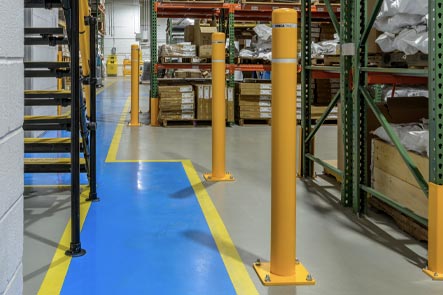
Bollards for warehouses are ideal for high-traffic areas such as loading docks and door jams. They absorb the impact of a forklift or other in-plant vehicle that would otherwise transfer to the building. Features include:
- Constructed from strong, durable, schedule 40 structural steel pipe.
- Available in 4-inch and 6-inch diameters.
- Surface and core-mounted options.
- High-visibility “OSHA Yellow” finish—custom colors available.
Turn the Tide to Avoid Corner and Floor Damage
Warehouse corner protection is easy to overlook because it seems so harmless—a ding here, a chip there. Yet structural corners are exposed on two sides and are highly susceptible to repeated damage, which can lead to an expensive structural problem.
Industrial corner guards offer a heavy-duty, low-profile design that anchors directly to the floor, protecting against front and side impacts. Their high-visibility finish also helps reinforce warehouse traffic safety by improving awareness around vulnerable areas.
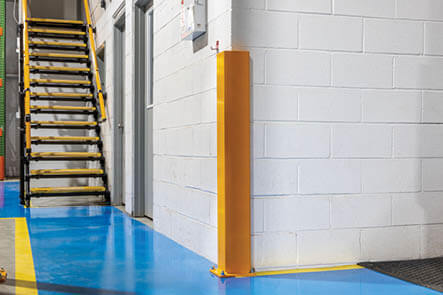
Available in 42-inch and 48-inch heights, corner guards can be replaced if damaged while continuing to protect critical building structures.
Protect Floor-Level Infrastructure
Floor-level exposure presents another significant risk. Rack supports, machinery bases, shelving systems, and structural supports sit directly within the path of forklift traffic.
Floor angle protection uses heavy-gauge steel angles anchored to concrete to create a physical barrier between vehicles and vulnerable assets.
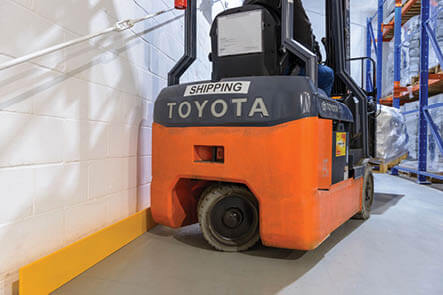
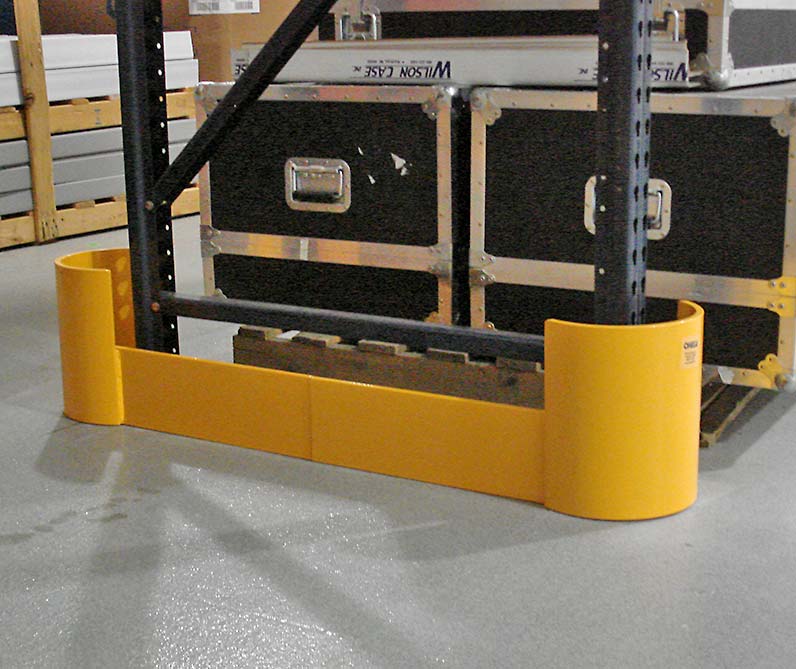
Available in custom lengths, floor angle guards can be installed as standalone protection or integrated with rack guards to create a more comprehensive facility protection system.
When combined with rack protection systems, floor angles help reduce the likelihood of rack damage that can compromise storage integrity and worker safety.
Take the Initiative for a Safer, Smarter Facility
A damaged inventory rack can become a serious safety concern if left unaddressed. A compromised structural corner may conceal damage to critical load-bearing components. These are not hypothetical risks—they are common challenges faced by warehouses that operate without adequate protection systems.
The facilities that avoid major losses view protection as infrastructure rather than an afterthought.
By implementing strategically placed bollards, corner guards, floor angle protection, and rack guards, building supply warehouses can maintain productivity while helping protect workers, inventory, equipment, and facility structures from avoidable damage.
Investing in warehouse safety barriers today can help reduce repair costs, minimize downtime, support OSHA compliance efforts, and create a safer environment for employees and visitors alike.
Contact Omega Industrial Safety today to learn how facility protection systems can help improve safety and prevent avoidable structural damage in your building supply warehouse.
Frequently Asked Questions About Building Supply Warehouse Safety
What are warehouse safety barriers?
Warehouse safety barriers are protective systems designed to shield building structures, rack systems, equipment, and employees from forklift and vehicle impacts. Common solutions include bollards, rack guards, corner guards, floor angle protection, and guardrails.
Why are forklift impacts a major concern in warehouses?
Even low-speed forklift impacts can damage rack systems, structural columns, loading dock areas, and equipment. Repeated impacts can lead to costly repairs, downtime, and increased safety risks.
Where should warehouse bollards be installed?
Bollards are commonly installed near loading docks, overhead doors, pedestrian walkways, electrical panels, utility connections, and structural columns that are vulnerable to vehicle traffic.
How do rack guards improve warehouse safety?
Rack guards help protect rack uprights from forklift collisions. Preventing damage to storage systems helps maintain structural integrity and reduces the risk of inventory loss or rack failure.
What is the best way to prevent warehouse damage?
The most effective approach combines employee training, traffic management practices, clear signage, and physical protection systems such as bollards, corner guards, floor angle protection, and rack guards.